

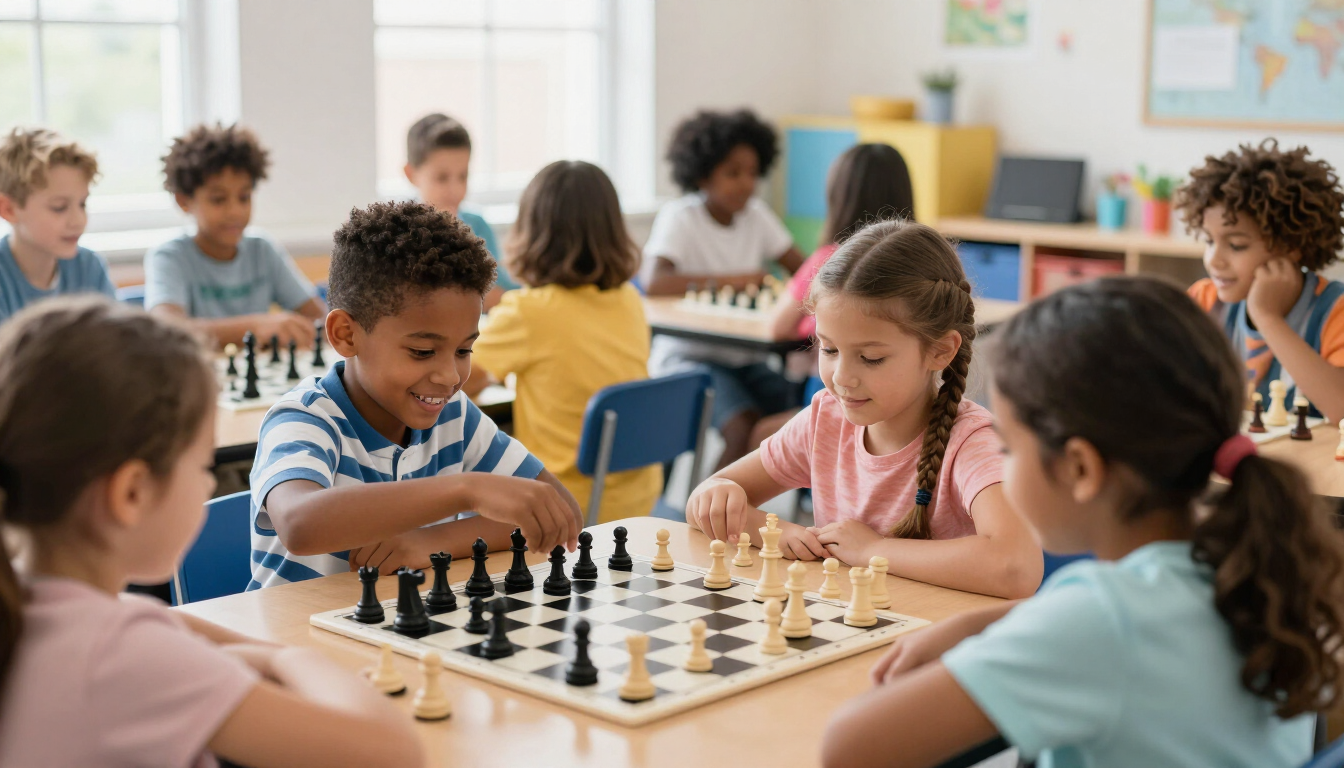
Benefits of Chess for Kids: 10 Ways Chess Can Help Children Learn, Think and Grow
Chess may look like a board game, but for a child, every game presents a series of decisions.
Where should I move?
What is my opponent planning?
What happens if I make this move?
What should I do if my plan doesn't work?
That combination of thinking, planning, problem-solving and learning from mistakes is one reason parents and educators have long been interested in the benefits of chess for kids.
Research into chess education has found promising associations with children's cognitive and academic development, although researchers also caution against treating chess as a guaranteed way to improve intelligence or school performance.
Perhaps the most valuable way to think about chess is simpler: chess gives children a fascinating environment in which they can practice thinking.
Here are ten ways chess can contribute to a child's development.
Chess Encourages Strategic Thinking
Every chess move has consequences. Children gradually learn that instead of simply asking “What can I do?” they should also ask “What happens next?”
A young player might want to capture an opponent's piece, but first has to consider whether that move leaves another piece—or the king—unprotected.
Observe → Think → Decide → Act → Evaluate
Repeated experiences like these give children opportunities to practice planning ahead rather than acting only on their first impulse. And that lesson extends well beyond the chessboard.
Chess Develops Problem-Solving Skills
A chess position is essentially a constantly changing problem. Children have to identify threats, compare possibilities and decide which solution appears best.
There may be several reasonable moves, but the player must eventually choose one. This makes chess an unusual learning activity: children aren't simply trying to remember the “correct answer.” They are learning how to work toward an answer.
Over time, they encounter hundreds of different situations requiring them to analyze information, recognize patterns and solve problems independently.
Chess Provides Practice in Focus and Concentration
A moment of lost concentration can change an entire chess game. A child can play brilliantly for twenty moves and then overlook one threat.
Chess therefore provides immediate feedback about attention. Children gradually discover the value of:
- Slowing down before moving
- Examining the entire board
- Checking an opponent's threats
- Staying engaged even during difficult positions
Concentration isn't something a child learns from being told, “Pay attention.” Chess gives children a reason to pay attention.
Chess Exercises Memory and Pattern Recognition
As children become more experienced, they begin recognizing familiar chess patterns—common checkmates, tactical ideas, piece combinations and strategic structures.
Instead of calculating every situation entirely from scratch, they begin thinking: “I've seen something like this before.”
Learning chess gives children repeated opportunities to retrieve information, recognize familiar situations and apply previous learning to new problems.
Chess Can Exercise Executive-Function Skills
Executive functions are the mental processes involved in activities such as planning, working memory, flexible thinking and self-control—abilities strongly associated with children's academic development.
Chess naturally requires many of these processes. A child may need to:
- Remember a plan
- Resist making an impulsive move
- Plan several moves ahead
- Switch strategies when circumstances change
- Evaluate whether the original plan worked
That doesn't mean playing chess automatically improves every child's executive functioning. But the game repeatedly puts children in situations where these skills are used.
Chess Teaches Children to Make Decisions
One of the most powerful characteristics of chess is remarkably simple: the child has to make the decision.
A coach can teach principles. A parent can offer encouragement. But during a game, the player ultimately chooses the move—attack, defend, trade pieces, or hold back. And once the piece has moved, the child lives with the consequence.
What can I learn from this decision?
This creates opportunities to develop independent judgment and personal responsibility, instead of fearing every mistake.
Chess Can Build Resilience
Every chess player loses. Beginners lose. Strong players lose. Grandmasters lose.
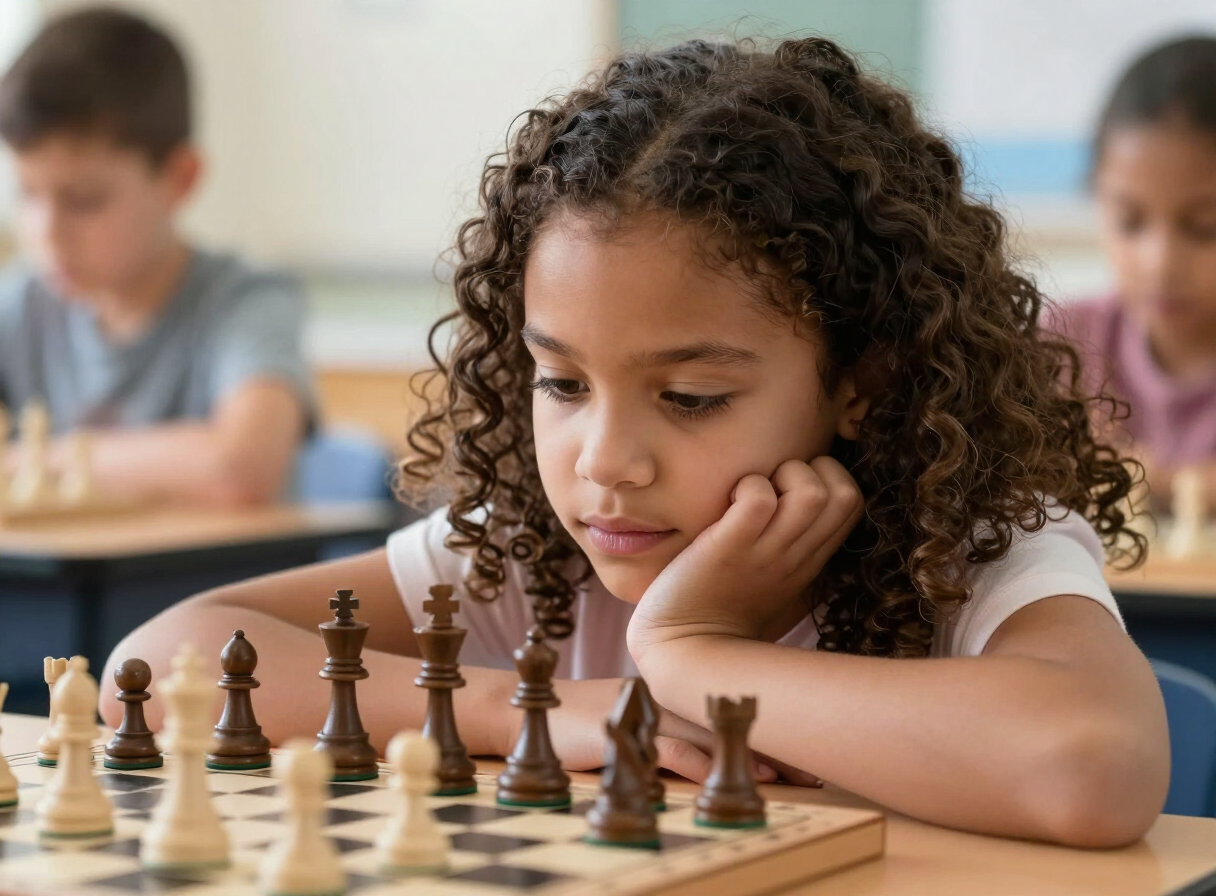
That makes chess a valuable environment for learning how to respond to setbacks. A lost game can become an opportunity to analyze what happened, where the position changed, and what could be done differently next time.
When adults and coaches emphasize learning rather than simply winning, a loss becomes information, a mistake becomes a lesson, and improvement becomes the objective.
Chess Can Help Build Confidence
Confidence doesn't always come from winning. Often, it comes from recognizing progress.
A child who once struggled to remember how the pieces move eventually completes an entire game. Then solves a tactical puzzle. Then wins a game. Then plays in a tournament. Then perhaps helps another beginner.
They made the decisions. They solved the problems. They improved.
Structured chess programs can give children visible evidence that practice leads to improvement.
Chess Encourages Sportsmanship and Respect
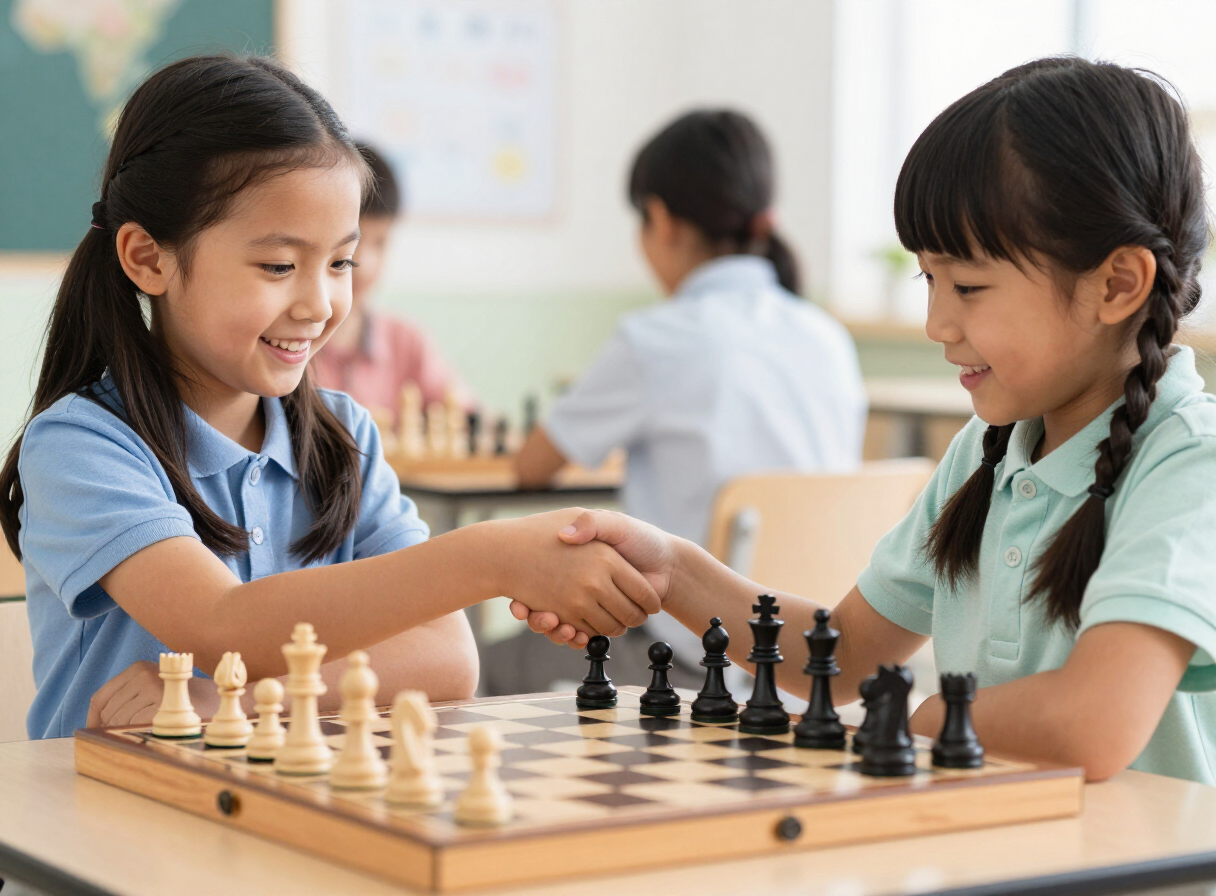
Although chess is an individual competition, it is also a social activity. Children sit across from another person, follow shared rules, compete, shake hands and learn how to respond appropriately to both winning and losing.
A healthy chess environment teaches children to:
- Respect opponents
- Follow rules
- Win graciously
- Lose respectfully
- Appreciate good play—even from the other side of the board
Those lessons are an important part of youth development.
Chess Can Support Academic Learning—but We Should Be Careful With the Claims
You may have seen claims that chess makes children smarter, dramatically raises IQ or guarantees better grades. The research is more nuanced.
A major meta-analysis of 24 studies involving thousands of young people found a modest overall positive effect of chess instruction on academic and cognitive outcomes, with somewhat stronger results for mathematics than reading. However, researchers also identified important limitations in the studies and cautioned that factors such as placebo effects could not be completely ruled out.
A subsequent review similarly concluded that evidence supporting the educational benefits of chess is promising but that stronger experimental research is needed.
Its value lies in something more fundamental: chess repeatedly asks children to think, concentrate, plan, decide, solve problems, adapt, and learn from mistakes.
At What Age Should Kids Start Learning Chess?
There is no perfect age. Some children become interested in chess at four or five. Others discover the game much later. For younger children, the priority should be enjoyment rather than mastery.
They can begin by learning how pieces move, simple captures, basic checkmates, mini-games, and fun chess puzzles. As their interest and concentration grow, more strategy can gradually be introduced.
The best starting age is often simply when the child is curious and ready to enjoy the game.
Is Chess Good for Beginners?
Absolutely. A child does not need to be academically gifted, highly competitive or already familiar with chess. Every chess player was once a beginner.
Good beginner instruction should make chess approachable, encouraging and enjoyable while gradually introducing more challenging concepts. The goal isn't to create a tournament champion immediately—the first goal is to help a child enjoy thinking.
Does My Child Need to Play Tournaments?
No. Children can benefit from learning and playing chess recreationally. For children who enjoy competition, however, tournaments can introduce another valuable dimension.
Tournament chess teaches children to make independent decisions under pressure, manage time, interact with unfamiliar opponents and handle both victories and losses. Competition should be an opportunity for growth—not the definition of success.
Why Chess Is More Than a Game
Those are chess skills. But they're also life skills:
- Think before you act.
- Look at the whole situation.
- Consider what another person might do.
- Make a plan.
- Adapt when the plan doesn't work.
- Accept the consequences of your decisions.
- Learn from your mistakes.
- Try again.
Our Approach at Chess Champs
At Chess Champs, we believe chess can be much more than an activity children learn—it can become a platform through which they grow. Our mission is to help children think strategically, grow confidently, and lead with purpose—regardless of their ability to pay.
That's why our ecosystem combines accessible community chess opportunities with structured learning, practice, competition, measurable progress and opportunities for young people to lead and give back. Because ultimately, our goal isn't simply to develop better chess players—it's to help develop confident thinkers, thoughtful competitors and future leaders.
Frequently Asked Questions
A child doesn't have to become a chess champion for chess to make a meaningful contribution to their development. Every game provides another opportunity to think. Every mistake provides another opportunity to learn. Every challenge provides another opportunity to grow.
And sometimes, sixty-four squares are all a child needs to discover just how capable they can become.
Ready to see the benefits of chess in action?
Give your child a place to begin—and a path to grow. Explore our free classes, after-school programs and tournaments.
Browse Chess Programs